

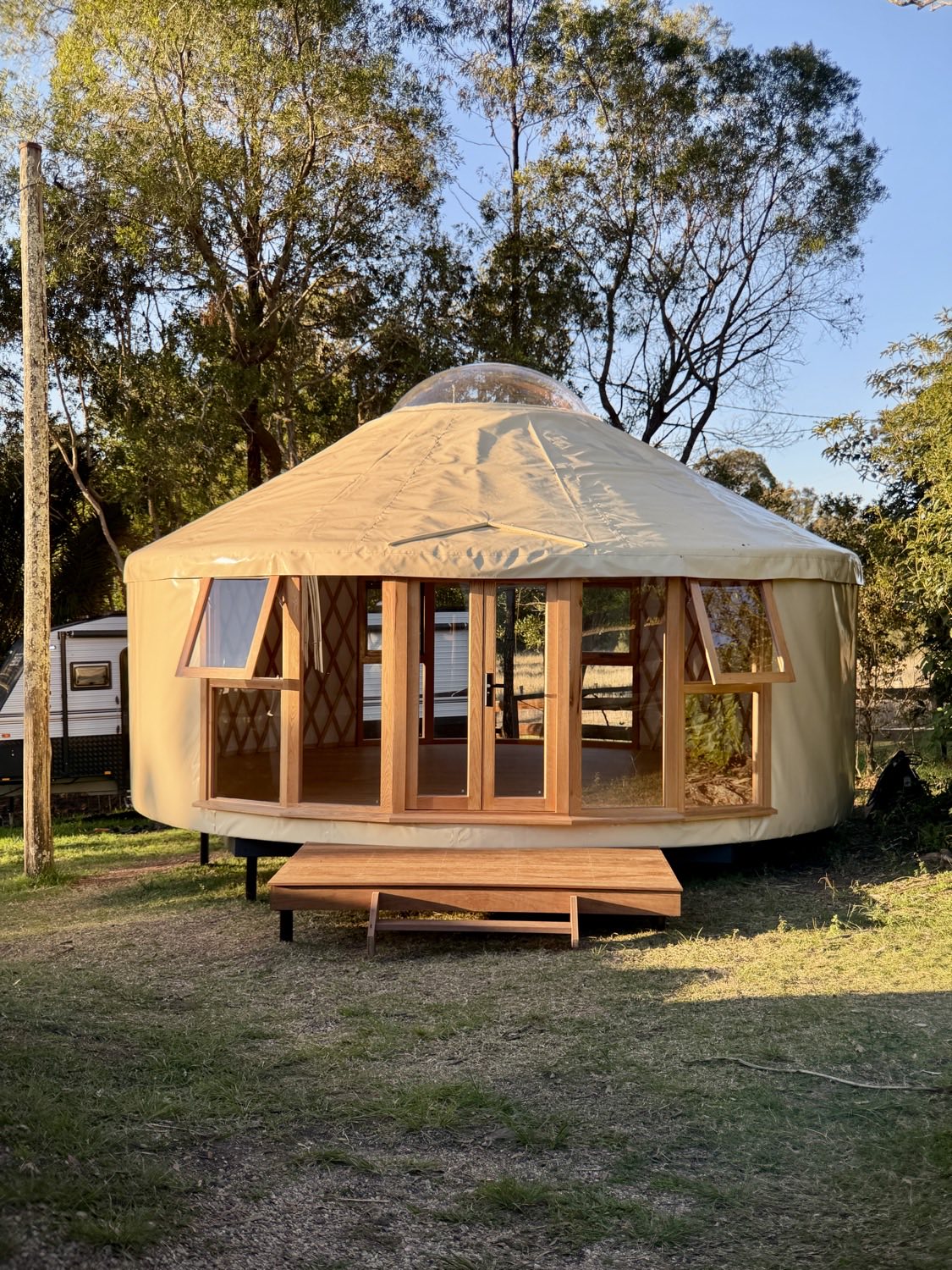
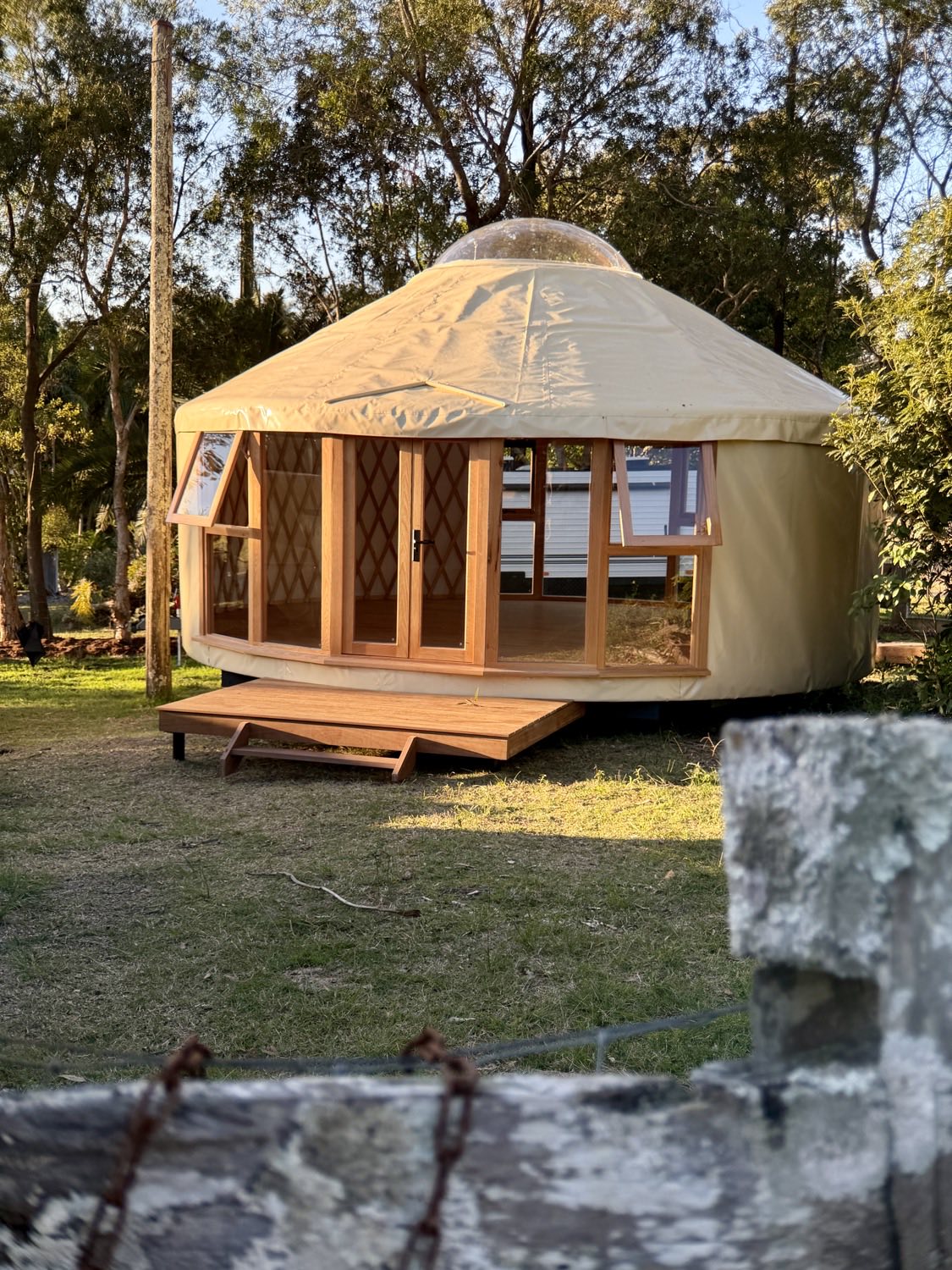
Every Living Yurt stands on galvanised ground screws, not concrete. Here's what a ground screw actually is, and why we build on them.
Ask most builders how to found a structure and the answer is a concrete slab. It's familiar, and for a lot of buildings it's the right call. For a yurt, we think it's the wrong one, and ground screws are why.
A concrete slab is permanent, disruptive to pour, and expensive before you've built anything above it. It needs the ground levelled and cleared, it needs to cure, and once it's in, it's in for good: if you ever want the land back the way you found it, that's not really an option. For a lot of the sites we work on, a slab is also overkill for what's ultimately a lightweight, round structure.
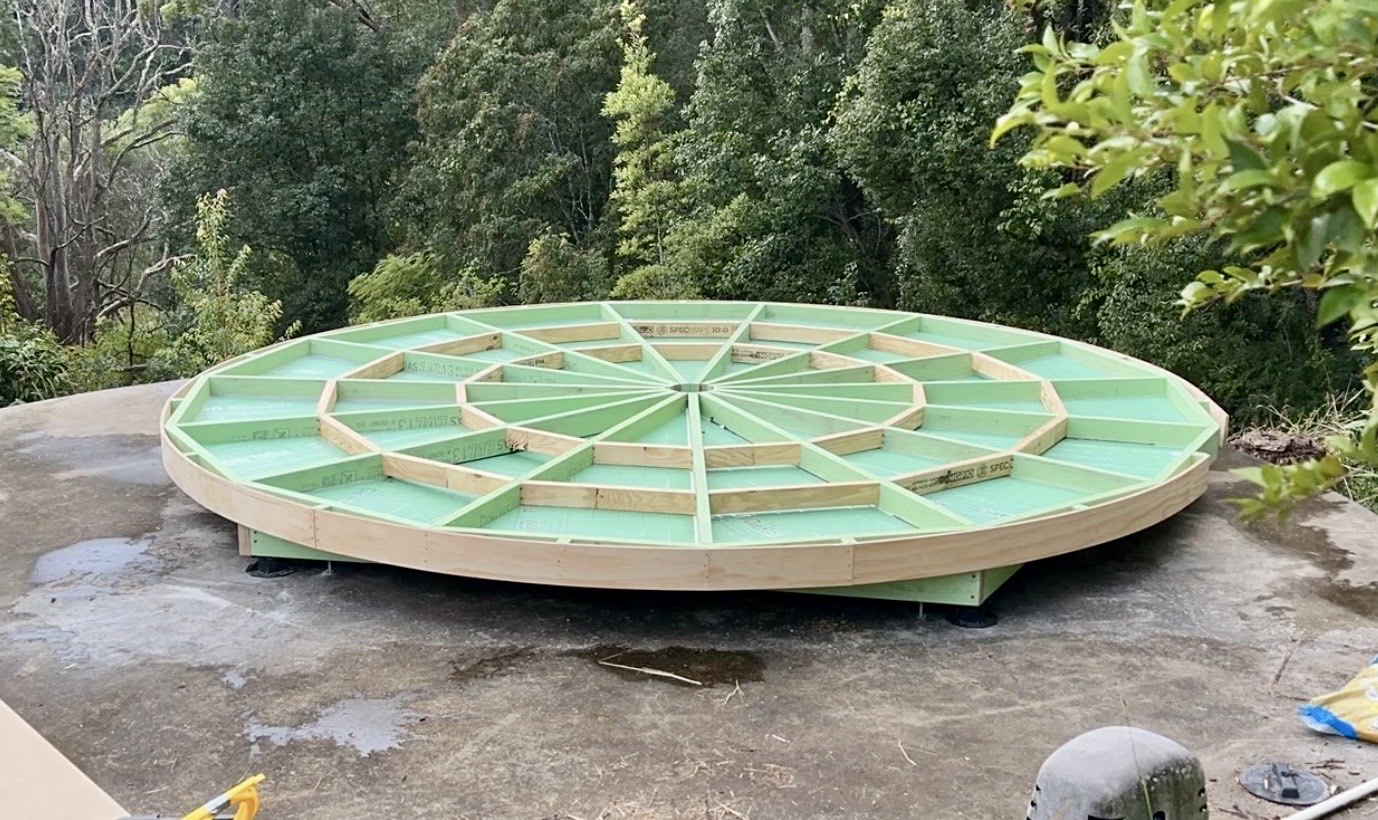
A ground screw is exactly what it sounds like: a galvanised steel foundation post that's screwed into the ground rather than dug, poured, or driven in. Think of it as a very large, load-rated screw. It bites into the soil as it turns, which means it goes in with minimal disturbance, no excavation, no spoil to cart away, and no waiting for anything to set before you can build on it.
We use premium ground screws with extra thick galvanisation and an epoxy coating on top of it, engineered specifically for Australian conditions: reactive clay soils, coastal humidity, and the corrosion that ordinary steel doesn't handle well over decades outdoors. That coating is what gets us to a 100+ year design life on the foundations, well beyond what most structures built on them will need.
Before any screws go in, we assess the site: slope, soil, drainage, and access all factor into where each screw goes and how deep. Ground screws follow the contour of your land instead of requiring it to be levelled first, which is part of why they disturb so little compared to a slab. It also means a sloping block that would need significant earthworks for a conventional foundation is often no extra trouble for us at all.
Because they're screwed in rather than poured, ground screws can also be removed. If a yurt is ever relocated or taken down, the foundations can come out with it, and the land underneath is left largely as it was. That's not something you can say about a slab, and for a lot of our clients on leased or environmentally sensitive land, it's the detail that makes a yurt possible at all.
Whether you know exactly what you want or you're just exploring the idea, we'll help you figure out if a yurt is right for you.